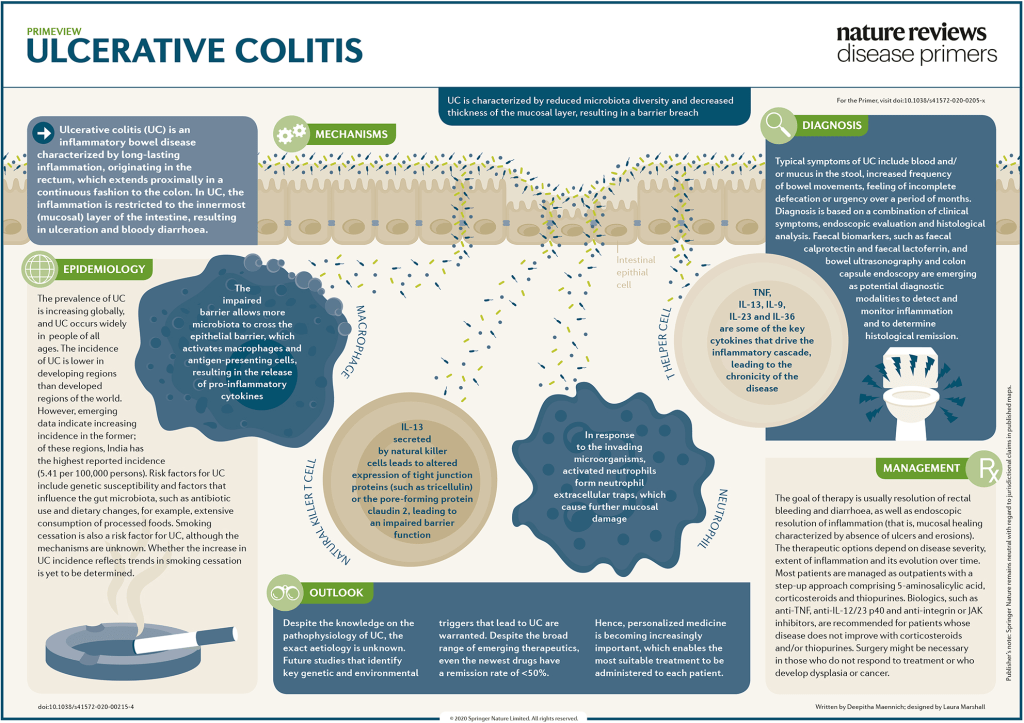
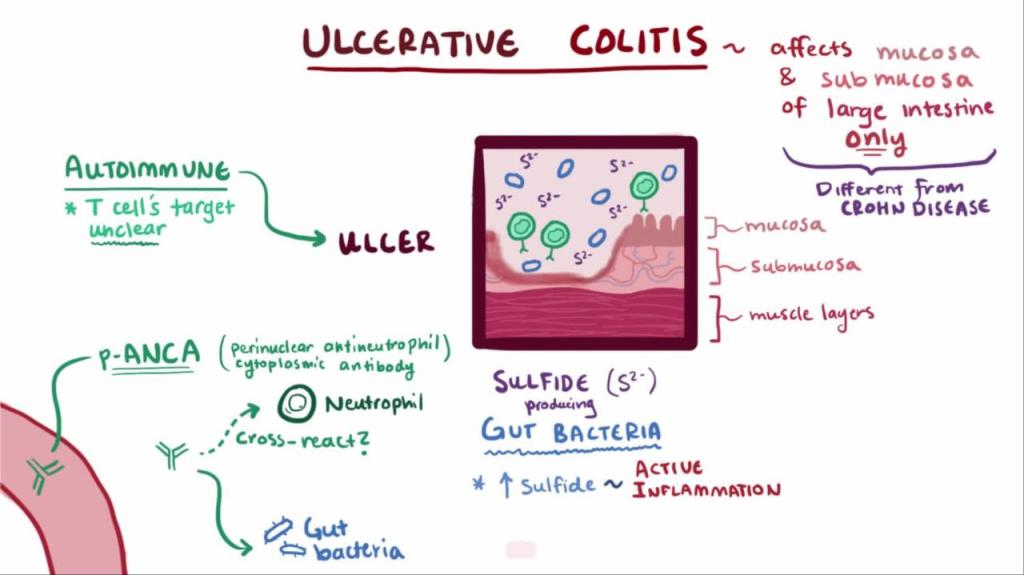
Ulcerative Colitis is an inflammatory bowel disease(IBD) that inflames the large intestine, from the colon to the rectum, sometimes affecting both organs. This inflammation can cause the rise of ulcers at any point along the colon and even affect separate tissue. Ulcers begin forming at the bottom of the colon and often spread upwards as they worsen without treatment.
Ulcers cause the body to increase the rate that food passes through the colon, which results in an increase in bowel movements often affecting nutritional absorption. This can also cause the ulcers to worsen, resulting in painful bleeding and discharge.
What Causes Ulcerative Colitis?
Specific causes are still relatively unclear, but Ulcerative Colitis is theorized to be be caused by over active immune system. Researches theorize that this intense activity causes the immune system to react to certain parts of the large intestine in an effort to fend off what is currently unknown to researchers.
Researches understand that the disease affects men and women at the same rate and heredity plays a large part in increasing risk for the disease. It has been observed that Ashkenazi Jewish descendants are at a higher risk of developing the disease which can begin before the age of 30, although it can develop at any age.
Types of Ulcerative Colitis
Although similar to Crohn’s disease which is another IBD, Ulcerative Colitis has some unique properties. Therefore a proper diagnosis is important for effective targeted treatment.
There are 5 variations of Ulcerative Colitis which are Ulcerative Proctitis, Proctosigmoiditis, Left-Sided Colitis, Pancolitis and Fulminant Colitis.
- Ulcerative Proctitis only affects the end of the large intestine and isolates the symptoms in this area. It is a mild version that can result in rectal bleeding if it worsens.
- Proctosigmoiditis – affects the rectum and the sigmoid colon, which is the lower part of the large intestine. It can result in varying amounts of abdominal pain and tenesmus.
- Left-Sided Colitis – results in inflammation that affects the area along the left side of the sigmoid and descending parts of the large intestine to the rectum. This often results in pain that affects the left side of the colon.
- Pancolitis – this variation is one of the serious variations that affects the entire large intestine. It must be properly managed with effective treatment or could lead to malnourishment and excessive weight loss.
- Fulminant Colitis – this version is rare but life-threatening because it affects the entire length of the colon and can lead to rupture of the colon or toxicity.
Treatment of Ulcerative Colitis
The first step towards effect treatment is to ensure a correct diagnosis by correctly identifying early symptoms which are painful abdominal activity and loose stools with blood or mucus. Fatigue, anemia, appetite loss, mouth sores and malnutrition are some symptoms.
Although there is no known cure, a proper treatment plan can lead to remission and minimize disruption of everyday activities.
 Inflammatory Bowel Disease