Ostomy belts are one of the accessories that are placed under the Ostomy products. This belt can help you a lot and another way it is totally unwanted. There are many factors that you must think about before the selection whether it is needed for you or not
Why is an Ostomy belt needed?
Belts have various purposes:
- helps your pouching system to remain in place
- Ensures better adhesion
- accentuating convex system
Helps you to feel more secure
The security of the pouching system can be affected by the formation of your stoma (the type of the procedure, and how it extends through the skin) and characteristics of the skin around the stoma (flat, any dips, creases, or folds). You may need a stoma if :
- There is the premature lifting of edges of the flange
- Continuous leakage at a crease or an end
- System that shifts with your routine activities
A belt can help you to fix the pouch system with your belly avoiding any kind of lifts and leakages.
You may need to use a convex pouching system according to the stoma and skin condition. The Ostomy belts help the pouching system to fit over the stoma properly, by increasing the tension between the flange and skin. The resolution tension due to the belt and the Ostomy belly can assist to flatten out the folds around the stoma skin, to make stomas tip-up, to avoid the seeping of feces under the flange. The Ostomy belts can help you to achieve your goal of preventing leakages and predicting wear time for your pouching system.
In some cases people don’t face a problem of leakage or predictable wear time, however, it is used to help them feel more secure. People who engage in physical activities like swimming, sports, enjoy soaking in a tub or hot bath, need an Ostomy belt. Because it provides better support, especially if there is any risk of pouching tacking. In some cases, people wear Ostomy belts at night to prevent any leakage due to different sleeping positions and movements.
Limitations
An Ostomy belt can’t work for every pouching system. Ostomy belts can limit the type of pouching system if you need them in your routine. Your product boxes may contain symbols that indicate the existence of belt tabs. The position of the tabs varies by Product Company: Hollister and ConvaTec place the tabs on the pouch, whilst Coloplast places the tabs on the flange. If you use closed-end pouches that are changed one or more times daily, belt tabs on the flange may be handier than tabs on the pouch itself. Again, not all product lines within a firm will provide belt tabs as an option, so talk to your ET or a company customer care representative about your best alternatives.
How to wear Ostomy belts?
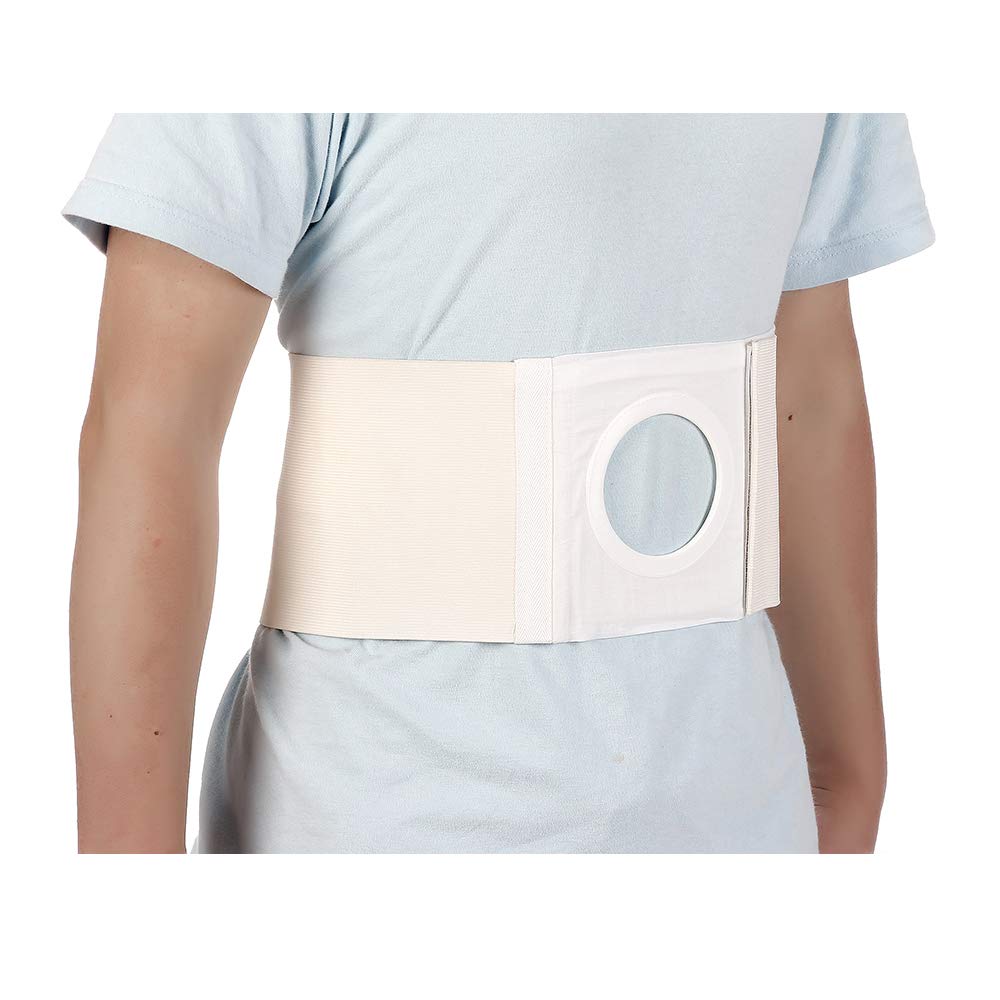
The belt looks best when worn in the same direction as the belt tabs: straight across at 3 and 9 o’clock. It’s possible that this isn’t in line with your natural waist. Avoid having the belt “ride up” into your natural waist if your natural waist is higher than the location of the belt tabs and pouch. If you do so it will pull the pouch and will change the position of the pouch and the belt instead of fixing the pouching system with your belly, a misplaced belt will only allow the belt to move up, reducing the potential leaks. You may notice that the belt will shift even with small or normal movements, in this situation go to the washroom and fix its position again.
How to take care of Ostomy belts?
Belts have elasticity and will become loose or stretch out when they are used continuously and over time. If you will use them with good care it will increase their life period. The care includes:
- washing the belts using hands
- Mild soap
- Cold water
- Drip drying
Besides this care, you still need to replace the belt 2 to 3 times a year to ensure the best performance. You can get latex-free belts from Holister, Covatec, and Coloplast.
Conclusion
The Ostomy belts should be in fit properly but they should not be too tight. You can access three sizes such as small, medium, and large. Pull the belt around your loin by attaching one end of the belt with the tab, in this way you can measure your accurate size. You should be allowed to easily pass or slide 2 to 3 fingers under the belt. Ulcers and irritations may be caused if you wear the belt too tight. In the case of a two-piece system it is hard to use the Ostomy belt because it causes the pouch to pop off the flange.
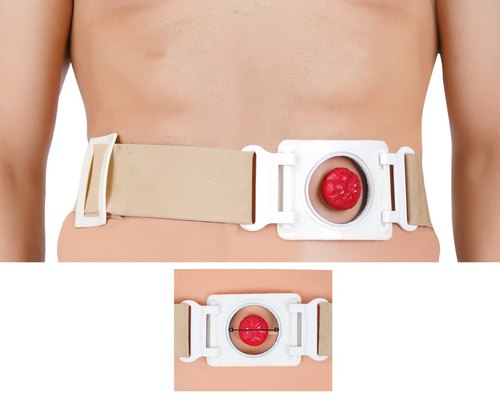
Your ET nurse can help you to select the Ostomy belt if it Is needed for you.
 Inflammatory Bowel Disease
Pingback: What You Need To Know About Changing And Caring For Your Ostomy | Inflammatory Bowel Disease